Every brand is one screenshot away from a crisis. A frustrated customer’s video, a leaked internal email, an executive’s offhand comment, or a coordinated wave of fake reviews can go from a single post to a trending topic in a matter of hours. By the time most companies hold their first internal meeting, the story has already been written for them.
The difference between a brand that recovers and one that becomes a case study in what not to do rarely comes down to luck. It comes down to process. Effective online crisis management is a discipline with clear, repeatable steps, and the companies that handle crises well have usually worked through those steps long before anything went wrong.
In this guide, we break down the complete framework our strategists use with clients, from preparation and detection through response, recovery, and long-term reputation repair.
What Counts as an Online Crisis?
Not every negative comment is a crisis, and treating every complaint like a five-alarm fire burns out your team and can amplify issues that would otherwise fade. An online crisis is a situation that threatens your brand’s reputation, revenue, or operations and is gaining visibility faster than normal customer service channels can contain it.
Common triggers include:
- Product or service failures such as recalls, outages, data breaches, or safety incidents
- Executive or employee misconduct that becomes public, whether online or in the press
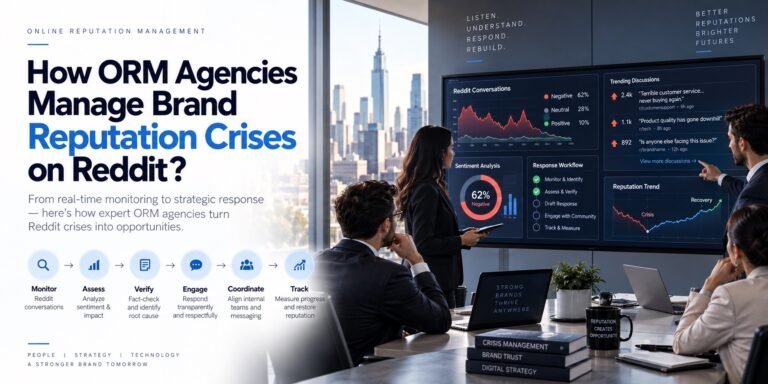
- Viral customer complaints on TikTok, X, Reddit, Instagram, or YouTube
- Negative media coverage or investigative reporting
- Coordinated attacks, including review bombing, competitor smear campaigns, or disinformation
- Tone-deaf marketing: a campaign or post that audiences find offensive or insensitive
- Legal or regulatory action that surfaces in search results and news feeds
The key question is not “Is this negative?” but “Is this spreading, and could it materially damage trust in our brand?”
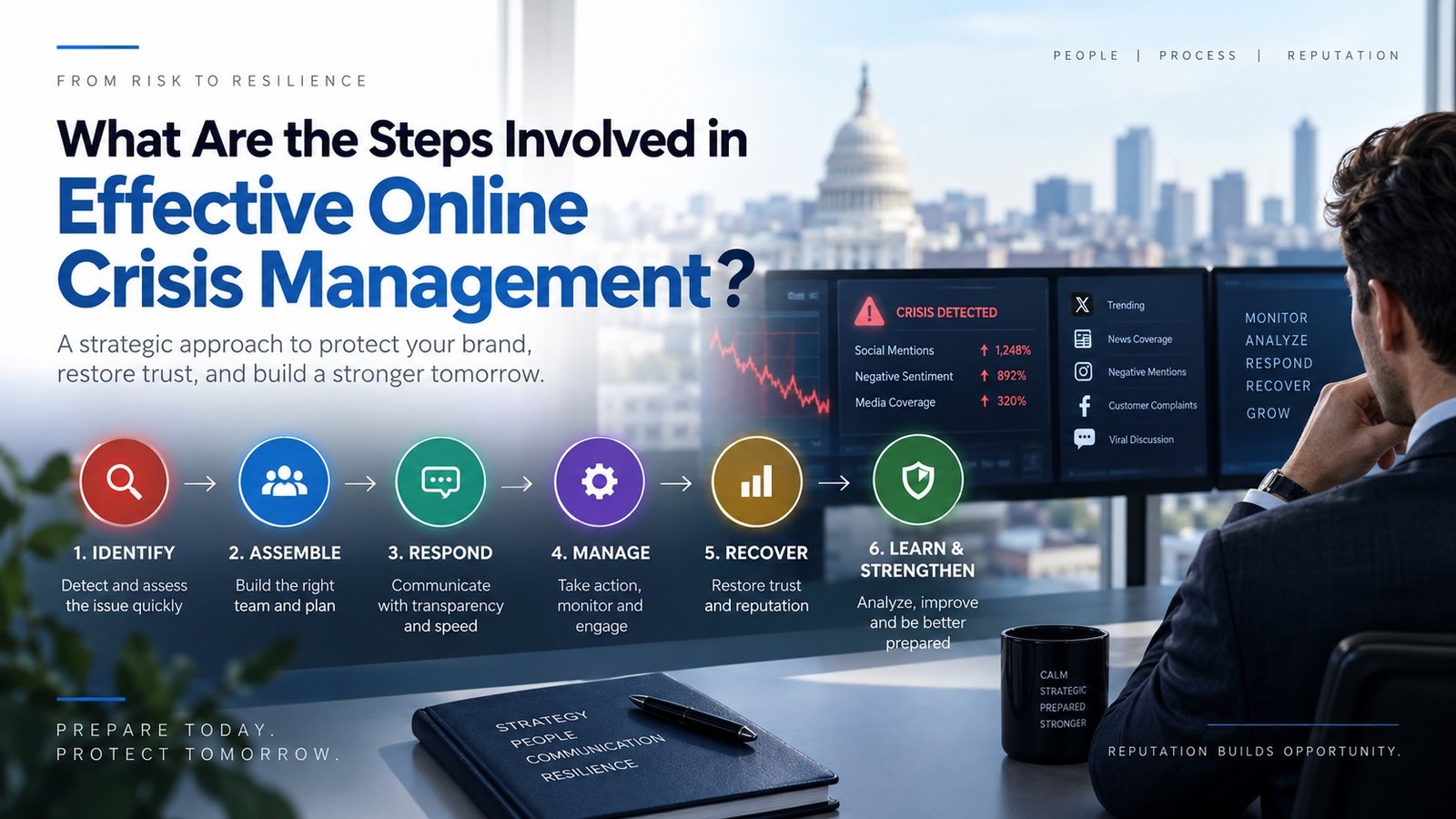
Step 1: Build a Crisis Plan Before You Need One
The most effective crisis response starts months before the crisis. When something breaks, your team won’t have time to debate who approves a statement or who has the password to the company’s social accounts. Those decisions need to be made in advance.
Assemble a crisis response team
Define a small core team with clear roles. At minimum, this typically includes:
- Crisis lead: the single decision-maker who owns the response
- Communications lead: drafts and approves all public messaging
- Legal counsel: reviews statements for liability and regulatory risk
- Social media manager: monitors channels and publishes approved responses
- Subject matter expert: the person who actually understands what went wrong (product, IT security, operations, HR)
- Executive sponsor: a senior leader who can authorize major decisions quickly
Map your risk scenarios
Brainstorm the crises most likely to hit your business. A SaaS company should plan for outages and data breaches. A restaurant group should plan for food safety incidents. A healthcare practice should plan for patient privacy complaints. For each scenario, outline the first actions, the people involved, and the channels affected.
Prepare holding statements
Write pre-approved “holding statements” for your top scenarios. These are short, flexible messages that acknowledge the issue and commit to an update, buying your team time to gather facts without going silent. Having legal review them ahead of time can save hours when every minute counts.
Secure your access and escalation paths
Document who has admin access to every social account, your website CMS, your Google Business Profile, and review platforms. Create an escalation chart with after-hours phone numbers. Crises don’t wait for business hours.
Step 2: Monitor Continuously to Detect Issues Early
Speed is everything in crisis management, and you can’t respond to what you don’t see. The earlier you catch a problem, the more options you have.
Effective monitoring covers:
- Social listening across X, Facebook, Instagram, TikTok, LinkedIn, and YouTube for brand mentions, executive names, product names, and relevant hashtags
- Review platforms including Google, Yelp, Trustpilot, the BBB, Glassdoor, and industry-specific sites
- Forums and communities such as Reddit and Quora, where stories often surface before they hit mainstream media
- News alerts for your brand, leadership team, and key competitors
- Search results for your branded keywords, so you notice when new negative content starts ranking
Set clear alert thresholds. A sudden spike in mention volume, a sharp shift in sentiment, a post from a high-follower account, or a journalist inquiry should all trigger immediate escalation to the crisis lead.
Step 3: Assess the Situation Quickly and Accurately
When an alert fires, resist the urge to respond immediately. Take a short, structured pause to understand what you’re dealing with. For most situations, this assessment should happen within the first 30 to 60 minutes.
Gather the facts
What happened? When? Who is affected? Is the claim true, partially true, or false? What evidence exists? Talk to the people closest to the issue, not just those closest to the conversation.
Measure the reach and velocity
How many people have seen it? Is the conversation growing, and how fast? Which accounts or outlets are amplifying it? Has mainstream media picked it up?
Classify the severity
A simple three-tier model helps teams calibrate their response:
- Level 1 – Issue: Limited visibility, contained to a few posts or reviews. Handle through normal customer service and monitor closely.
- Level 2 – Emerging crisis: Growing engagement, spreading across platforms, or involving an influential voice. Activate the crisis team and prepare a public response.
- Level 3 – Full crisis: Widespread visibility, media coverage, safety or legal implications, or significant business impact. Full team activation, executive involvement, and legal counsel from the start.
Step 4: Respond Fast With a Clear, Human Message
Silence is almost always interpreted as guilt, indifference, or incompetence. In the absence of a statement from you, the internet will fill the gap with speculation. Your first public response should come quickly, often within the first hour or two for a serious crisis, even if you don’t yet have every answer.
The anatomy of an effective crisis statement
Strong crisis statements tend to share the same core elements:
- Acknowledge the situation directly. Don’t minimize or use vague language.
- Take responsibility where it’s warranted. A genuine apology carries far more weight than a defensive one.
- Show empathy for the people affected.
- Explain what you’re doing about it right now.
- Commit to a follow-up with a specific timeframe.
What to avoid
- “We apologize if anyone was offended.” Conditional apologies read as insincere.
- Corporate jargon and legalese that sounds like it was written to avoid accountability
- Blaming customers, employees, or third parties before the facts are clear
- Deleting critical comments or posts, which almost always gets screenshotted and makes the story bigger
- Arguing with critics in public threads
- Speculating or sharing details you haven’t verified
Choose the right channels
Respond where the conversation is happening. If the crisis started on TikTok, a press release alone won’t reach the people talking about it. For serious issues, publish a full statement on your website that can serve as the single source of truth, then share it across your social channels, email your customers directly if they’re affected, and brief your employees so they aren’t learning about it from the news.
Step 5: Communicate Consistently Across Every Stakeholder
A crisis affects more than your public audience. Every stakeholder group needs the right information at the right time, and the messages must be consistent. Mixed signals create a second crisis.
- Employees: Brief them early. Tell them what happened, what the company is doing, and how to respond if asked. Remind them not to comment publicly.
- Customers: Explain the impact on them and what they should do, if anything.
- Media: Designate one spokesperson. Prepare talking points and anticipate tough questions.
- Investors and board members: Provide proactive updates before they read about it elsewhere.
- Partners and vendors: Let them know how the situation may affect them.
- Regulators: Where disclosure obligations exist, work with legal counsel to meet them on time.
Keep a shared, continuously updated fact sheet so everyone speaking on the company’s behalf is working from the same information.
Step 6: Take Real Corrective Action
Words stop a crisis from getting worse. Actions are what actually end it. Audiences are quick to spot the gap between a heartfelt apology and business as usual.
Depending on the situation, corrective action might include:
- Fixing the product defect, security vulnerability, or service failure
- Issuing refunds, replacements, or compensation to affected customers
- Pulling an offensive campaign and explaining what you learned
- Investigating misconduct and taking appropriate personnel action
- Changing policies, training, or internal processes
- Bringing in independent auditors or third-party experts to verify fixes
Then communicate those actions publicly. Concrete, verifiable changes are the most persuasive message you can send.
Step 7: Engage With the Conversation Strategically
Once your initial statement is out, you’ll need to manage the ongoing conversation. That doesn’t mean replying to every comment.
- Respond to genuine questions and affected customers with helpful, specific information, and move detailed conversations to private channels when appropriate.
- Correct clear misinformation calmly and with facts, linking back to your official statement.
- Don’t feed trolls. Accounts acting in bad faith aren’t looking for answers.
- Report content that violates platform policies, such as fake reviews, impersonation, harassment, or defamatory claims, through each platform’s official reporting tools.
- Pause scheduled marketing content. An upbeat promotional post in the middle of a crisis looks out of touch.
Step 8: Track Sentiment and Adjust Your Approach
A crisis response plan is not a set-it-and-forget-it exercise. Keep measuring throughout the response so you know whether your actions are working.
Metrics worth tracking include:
- Mention volume over time
- Sentiment breakdown (positive, neutral, negative)
- Share of voice compared with competitors
- Media coverage volume and tone
- Review ratings and new review velocity
- Branded search results on page one of Google
- Customer service contact volume and website traffic
If negative sentiment keeps rising after your statement, it’s a signal that your message isn’t landing, your corrective actions aren’t sufficient, or new facts have emerged. Be willing to update your response.
Step 9: Repair Your Search Results and Long-Term Reputation
This is the step most companies skip, and it’s often the most costly. The social media storm may fade within days, but news articles, Reddit threads, and negative reviews can sit on page one of Google for years. Every prospective customer, investor, and job candidate who searches your name will find them.
Long-term reputation repair typically involves:
- Search result suppression: Publishing and promoting high-quality, authoritative content, including owned media, thought leadership, and earned press coverage, so it outranks negative results for your branded searches.
- Review recovery: Building a steady flow of genuine reviews from satisfied customers to rebuild your ratings over time. Never buy fake reviews; it violates platform policies and FTC rules and can create a far bigger crisis.
- Content removal where appropriate: Pursuing removal of content that is defamatory, violates platform policies, or infringes privacy, working with legal counsel where needed.
- Positive storytelling: Showcasing the changes you made, customer success stories, community involvement, and the people behind your brand.
- Executive visibility: Rebuilding trust in leadership through interviews, bylined articles, and a strong professional presence online.
This work takes time. Most brands see meaningful movement within the first few months, but fully reshaping established search results is a longer-term effort. Starting early makes a significant difference.
Step 10: Conduct a Post-Crisis Review
Once the situation has stabilized, bring the crisis team together for an honest debrief. The goal isn’t to assign blame. It’s to make your organization stronger for next time.
Questions to answer:
- How and when did we first detect the issue? Could we have caught it sooner?
- How long did it take to issue our first response?
- Were roles and approval processes clear, or did we lose time to confusion?
- Which messages resonated, and which fell flat?
- Did our corrective actions address the root cause?
- What’s the lasting impact on search results, reviews, and sentiment?
Update your crisis plan, holding statements, and monitoring setup based on what you learned. Then run tabletop exercises once or twice a year so your team can practice before the next real incident.
Common Online Crisis Management Mistakes
Even well-intentioned teams make predictable errors under pressure. Watch out for these:
- Waiting too long to respond while trying to get every detail perfect
- Issuing a non-apology that sounds defensive or legalistic
- Letting multiple people speak with inconsistent messages
- Deleting negative comments or disabling comments entirely without explanation
- Forgetting employees, who then share their own version of events
- Declaring victory too early and returning to normal marketing before trust is rebuilt
- Ignoring search results after the social media noise dies down
When to Bring in an Online Reputation Management Partner
Many organizations handle smaller issues in-house. But it’s worth bringing in specialists when:
- The crisis is spreading across multiple platforms or has reached mainstream media
- You’re facing a coordinated attack, such as review bombing or a disinformation campaign
- Negative content is already ranking on page one of Google for your brand or executives
- Your internal team lacks 24/7 monitoring or crisis communications experience
- The situation involves legal, regulatory, or safety implications
An experienced online reputation management team brings real-time monitoring, tested response playbooks, media relationships, and the search engineering expertise needed to repair your reputation after the headlines fade.
Key Takeaways
- Prepare before a crisis: build a team, map scenarios, and pre-approve holding statements.
- Monitor continuously so you detect problems while they’re still small.
- Assess quickly, then respond fast with a clear, human, accountable message.
- Keep every stakeholder informed with one consistent story.
- Back your words with real corrective action.
- Track sentiment and adjust your approach as the situation evolves.
- Don’t stop when the noise fades: repair your search results and reviews.
- Learn from every incident and update your plan.
A crisis doesn’t have to define your brand. Handled with speed, honesty, and a disciplined process, it can even become proof of the values you claim to stand for.
Worried about how your brand would hold up in a crisis, or already dealing with one? Request a free reputation audit and a senior strategist will map your current risks and search exposure within 24 hours. Businesses in the United States can also learn more about our ORM services in the USA.